

Revitalizing
PRP Autologous Blood
An autologous regenerative procedure that returns platelet-rich plasma separated from your own blood. Everything from the blood draw to the injection is done in one place on the same day.
PRP
PRP Autologous Blood
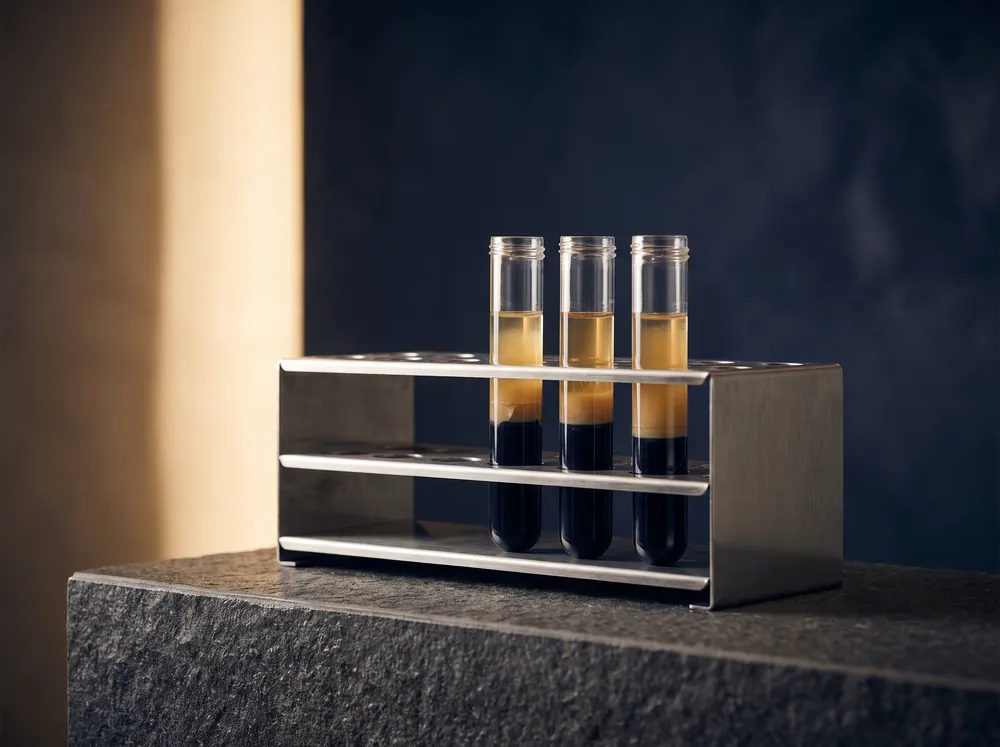
PRP is a procedure in which your own drawn blood is centrifuged, only the platelet-concentrated plasma layer is separated, and it is returned to the areas that need it. Rather than introducing an outside formulation, it reuses a component already in your body. The condition of the plasma prepared can vary with the state of your blood, however, so we treat the pre-procedure check as important.
Recommended for
- Those who want to start with autologous components rather than outside formulations
- Those whose skin has thinned and lost firmness, leaving the texture rough
- Those with an uneven surface from acne marks and shallow scars
- Those who want to discuss a care direction for scalp and hair condition in consultation first
- Those who want to manage recovery speed after laser treatment
- Those who are cautious about product choice because of a history of allergies
Our View
How we see it at Cheongdam Laplace
The process
01
Consultation and interview
We check your current medications and blood-related history and, together with the target areas, judge whether today is a suitable state for a blood draw.
02
Small venous blood draw
A small amount is drawn from an arm vein. It usually takes a few minutes, and the volume varies with the extent of the area to be treated.
03
Plasma centrifugation
A dedicated kit is used to centrifuge the blood and separate the platelet-concentrated plasma layer. Preparation usually takes 10-20 minutes.
04
Injection and compression
After topical anesthesia, it is injected in divided amounts at the planned depth, with light compression by area to reduce bruising.
Treatment information
| Procedure time | About 40-60 minutes (including blood draw and separation, varies by individual) |
|---|---|
| Anesthesia | Topical anesthetic for about 20-30 minutes, with cooling if needed |
| Recovery | Injection marks and bruising usually ease within 3-7 days (varies by individual) |
| Recommended interval | Usually 3 or more sessions at 3-4 week intervals, then progress is reviewed |
| Treatment area | Face, neck, scalp, and other areas decided by condition |
Frequently asked questions
How much blood is drawn?
It varies with the extent of the procedure, but the amount is small, similar to a routine blood test. Some people feel dizzy after a blood draw, so please avoid coming on an empty stomach, and we recommend enough fluids and sleep the night before.
What is the difference between PRP and exosomes?
PRP is an autologous method that returns components obtained from your own blood, while exosomes make use of cell-derived signaling substances. Rather than one being better, the choice depends on the goal and the skin's condition, and the two are sometimes planned together at different times.
Does it bruise easily?
It varies with the injection area and skin thickness, and thin areas such as around the eyes may bruise. Bruising usually fades within 3-7 days, so if you have an important event, we recommend booking with some room before and after it.
Can it be done on the same day?
Everything from the blood draw to the injection is done in a single visit. If you are taking anticoagulants or aspirin, however, please do not stop them on your own; tell us what you discussed with the prescribing physician and we will set a new date.
Precautions and possible side effects
- Pain, swelling, bruising, and pinpoint bleeding may occur at the injection site.
- Dizziness or a temporary vasovagal reaction may occur during the blood draw.
- Tenderness and a heavy feeling may continue for a few days after a scalp procedure.
- Rarely, infection, nodules, or pigment changes may occur at the injection site.
- The procedure may be restricted in cases of blood disorders, thrombocytopenia, or anticoagulant use.
- If you are pregnant or breastfeeding, please discuss whether the procedure is possible with us in consultation first.
- If you have an active infection or are undergoing cancer treatment, please be sure to tell us before the procedure.
- Results and the course of recovery vary by individual.
Treatment results may vary depending on individual condition, and side effects may occur. Please confirm the details through a consultation with our medical staff.
Consultation comes first
Before deciding on a treatment, let us look at your current condition together.