

Reverse Aging
Ulthera
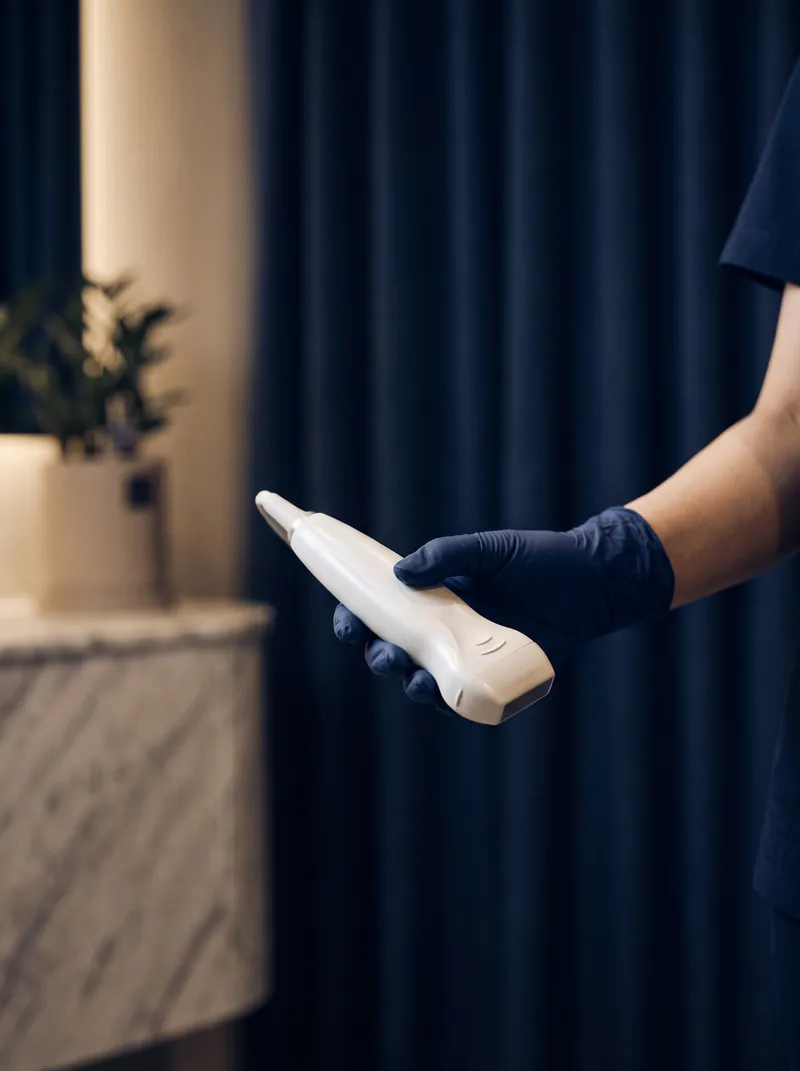
Ulthera focuses energy on the SMAS layer while confirming the layers with ultrasound imaging. We first examine the depth at which the sagging began, then apply it.
Ulthera
Ulthera
In lifting, what matters is not intensity alone but which layer the energy reaches. Ulthera focuses ultrasound energy past the epidermis and dermis down to the SMAS layer, approaching non-surgically the fascial layer that surgery used to lift directly. The layer and depth to be treated are decided after the thickness is confirmed with ultrasound imaging.
Recommended for
- Those who feel the cheeks and jawline have begun to descend
- Those hesitant about surgery who are considering a non-surgical lift
- Those who feel the nasolabial folds are deepening
- Those who want to address neck lines and the under-chin area together
- Those with thicker skin and a clearly visible loss of firmness
Our View
How we see it at Cheongdam Laplace
The process
01
Identifying the cause of sagging
We distinguish whether the sagging comes from volume loss or fascial laxity, and also review the condition of the bone structure and fat layer.
02
Planning the delivery depth
We confirm the skin thickness of each area on imaging and allocate the 1.5 · 3.0 · 4.5mm cartridges.
03
Delivery after anesthesia
With topical anesthesia and, where needed, pain control, we deliver layer by layer along the lines planned in advance.
04
Observing recovery
Around three months later we review how far the collagen response has appeared and decide together whether another session is needed.
Treatment information
| Treatment time | About 40-60 minutes depending on the area covered |
|---|---|
| Anesthesia | Topical anesthetic, with pain control where needed (decided after consultation) |
| Recovery | Daily activity the same day; swelling usually 2-3 days (varies by individual) |
| Recommended interval | Usually around 12 months, adjusted to your condition |
| Treatment areas | Forehead · Cheeks · Jawline · Under-chin · Neck |
Frequently asked questions
I have heard that it is very painful.
A brief aching pain may be felt as the energy reaches the deeper layers. Topical anesthesia, intensity adjustment, and rest between areas are used together to ease the burden, and if the pain is severe we lower the intensity or divide the shots.
I am worried my face will look hollow.
Excessive energy in areas with a thin fat layer can make the volume appear reduced. So we check the distribution of fat before delivery and plan either to exclude the zones where hollowing is a concern or to lower the depth there.
How long does the effect last?
The collagen response usually appears over 3-6 months, and aging continues after that. How long it holds depends on age, skin condition, and lifestyle, so we generally discuss the next point in time at around the one-year mark.
Can I combine it with filler or thread lifting?
They are sometimes planned together, but the order matters. Thermal energy can affect filler or threads, so if you have had previous treatments we check the area and timing, then adjust the delivery range or leave an interval.
Precautions and possible side effects
- Redness, swelling, and tenderness to pressure may continue for a few days after the treatment.
- Temporary reduced sensation or a tingling feeling sometimes remains for several weeks.
- Temporary muscle weakness and facial asymmetry from nerve stimulation are reported rarely.
- In areas with a thin fat layer, a sense of reduced volume may remain.
- Linear redness, minor burns, or pigmentation may occur.
- It is not performed during pregnancy or where there is infection or an open wound in the treatment area.
Treatment results may vary depending on individual condition, and side effects may occur. Please confirm the details through a consultation with our medical staff.
Consultation comes first
Before deciding on a treatment, let us look at your current condition together.